
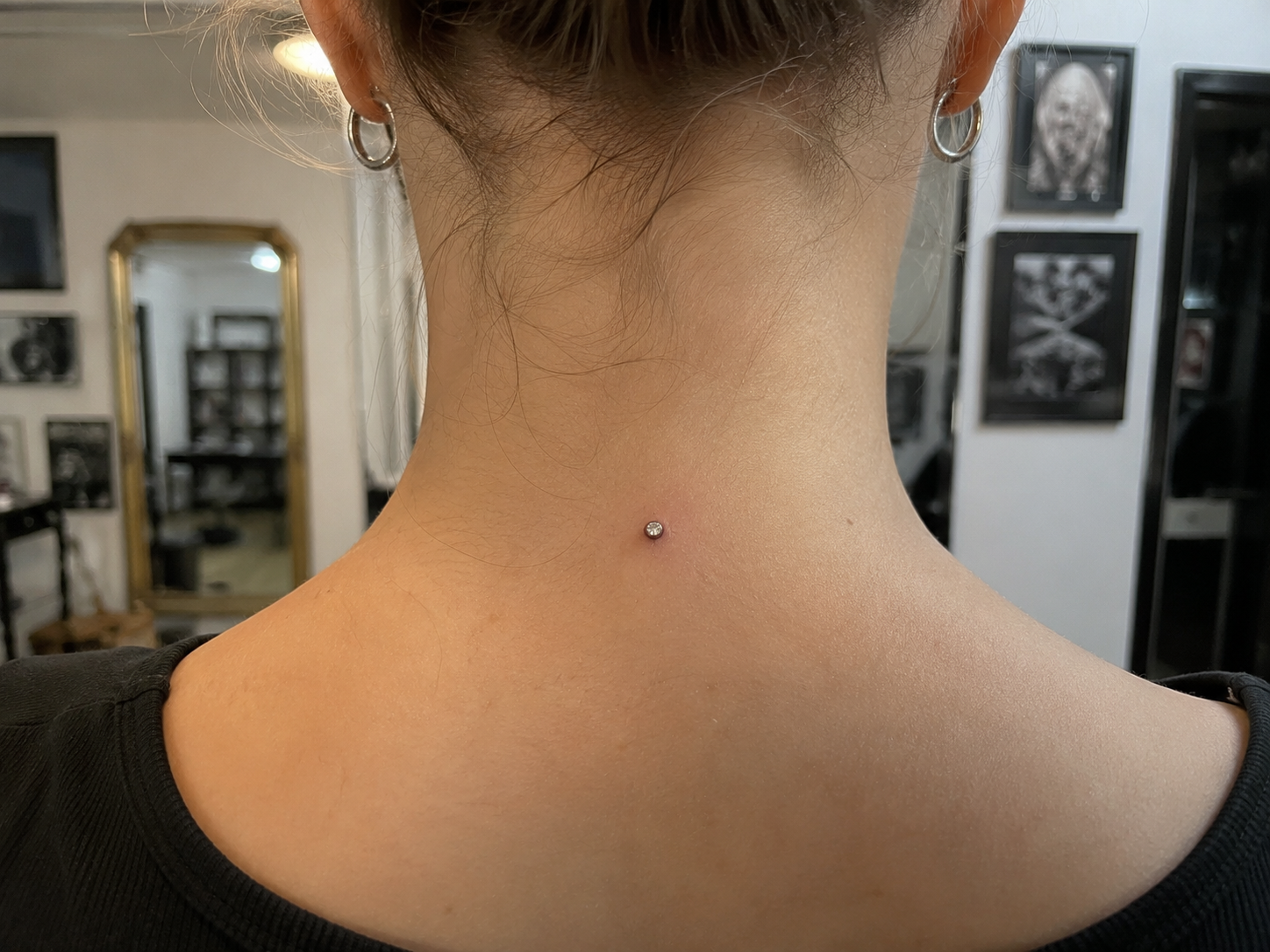
A microdermal implant piercing is small, eye-catching, and incredibly versatile. Unlike a traditional piercing with an entry and exit point, a microdermal features a single decorative top that sits directly on your skin. Whether placed on your décolletage, hip, neck, or face, a dermal anchor creates a subtle yet striking accent. To ensure it looks great for years to come, however, choosing the right jewelry is only part of the process. An experienced piercer, precise placement, and proper aftercare are just as important.
A microdermal—also known as a dermal anchor or skin anchor—consists of a small implant-grade titanium base that is placed beneath the skin. A threaded post extends slightly above the surface, allowing a decorative top, such as a bead, gemstone, or flat disc, to be securely attached.
Unlike most other piercings, a microdermal has only one visible point. There is no exit hole on the opposite side. This makes it possible to place the jewelry in areas where conventional piercings aren't practical. At the same time, that's exactly what makes microdermals unique: because there is no full piercing channel, the anchor relies on proper healing into the surrounding tissue for long-term stability.
For this reason, a microdermal shouldn't be chosen on impulse just because it looks good on social media. Your skin type, the amount of movement in the chosen area, friction from clothing, and your everyday lifestyle all play an important role in determining whether a placement is suitable.
Popular locations include the décolletage, the area above the sternum, the hips, lower back, collarbone, the back of the neck, or subtle accents on the face. A dermal anchor usually looks most natural when it complements your body's natural lines rather than competing with them.
That said, not every attractive location is ideal for a microdermal. Areas exposed to frequent friction, stretching, or constant pressure require extra consideration. For example, a microdermal placed along the waistband may repeatedly catch on clothing. Facial placements are also influenced by facial expressions, skincare routines, and the likelihood of accidentally touching the jewelry. If you regularly wear sports equipment or protective gear for work, it's important to discuss this during your consultation.
Your individual anatomy also matters. If your skin is particularly thin, scarred, or highly mobile, a different placement may offer better long-term results. A professional consultation isn't about saying yes to every request—it's about finding a placement that looks great while giving your piercing the best possible chance to heal successfully.
A professional appointment starts with careful placement. The desired location is marked while you're standing or in a natural position, as your skin can shift depending on your posture. Only once the placement, spacing, and alignment are exactly right does the procedure begin.
Your skin is thoroughly disinfected, the area is prepared under sterile conditions, and only sterile single-use instruments are used. A small pocket is then created in the skin, allowing the implant-grade titanium anchor to be placed precisely beneath the surface. The decorative top is attached afterwards. The procedure itself usually takes just a few minutes, but the consultation, preparation, and aftercare instructions deserve plenty of time—and a professional studio should never rush them.
Implant-grade titanium is the preferred choice for initial jewelry. It's lightweight, biocompatible, and significantly reduces the risk of irritation compared to lower-quality alloys. During the healing phase, a low-profile top is generally more practical than a large or raised gemstone, as it's less likely to catch on clothing or other objects.
Pain is a personal experience, and everyone feels it differently. Most clients describe it as a brief, sharp sensation followed by some pressure. Feeling nervous is completely normal. A skilled piercer, a calm environment, and a clear explanation of each step can make the experience much more comfortable.
Although the surface of your skin may appear healed fairly quickly, that doesn't necessarily mean the anchor is fully secure beneath the skin. Depending on the placement, your skin type, and the amount of movement in the area, healing can take several months. During this time, it's normal for the piercing to feel sensitive, slightly tight, or occasionally produce a small amount of clear fluid.
One thing many people underestimate is that microdermals can migrate or be rejected even after they've healed successfully. Some remain stable for many years, while others slowly begin to work their way toward the surface over time. This isn't simply a matter of hygiene, nor is it your fault. Your anatomy, lifestyle, jewelry material, placement, and natural healing response all influence how well a dermal anchor settles.
Keep an eye on any changes. If the jewelry begins to sit noticeably higher than before, the skin above the anchor becomes thinner, persistent redness develops, or the area becomes increasingly painful, have it checked by a professional as soon as possible. Never try to push a loose or rejecting anchor back into the skin yourself.
During the first few weeks, less is often more. Only touch your piercing with freshly washed hands, and clean it with sterile saline solution as recommended by your piercing studio. Avoid picking at any crusting. If necessary, soften it gently first and only remove what comes away without force.
Avoid alcohol, hydrogen peroxide, harsh soaps, ointments, and home remedies, as they can irritate the skin and interfere with healing. You should also resist the urge to twist, rotate, or constantly check the jewelry. The less the piercing is disturbed, the better.
Take extra care when getting dressed, washing your hair, showering, and sleeping. Loose, clean clothing helps minimize friction. If your dermal is on your face, avoid getting makeup, sunscreen, or skincare products directly into the fresh piercing. During the initial healing period, it's also best to stay away from swimming pools, saunas, hot tubs, and natural bodies of water, as they can expose the piercing to bacteria and excess moisture.
The decorative top should only be changed once the piercing has fully healed and feels completely stable. Ideally, have the first jewelry change performed by your piercer. This allows them to make sure everything has healed properly while avoiding unnecessary stress on the anchor during the process.
Like any piercing, a microdermal implant piercing comes with potential risks, including swelling, bleeding, irritation, infection, scarring, or rejection of the anchor. A reputable piercing studio will discuss these risks openly rather than focusing only on the final result. If you have a known metal allergy, a skin condition, impaired wound healing, or take medication that affects blood clotting, it's important to discuss your individual circumstances before your appointment.
If you notice increasing redness, throbbing pain, excessive warmth, foul-smelling yellow or green discharge, fever, or generally feel unwell, seek medical attention promptly. If you suspect an infection, do not remove the jewelry yourself. Instead, consult a qualified piercer or healthcare professional first so the situation can be assessed and treated appropriately.
The same applies to medical imaging procedures such as MRI scans or X-rays. Always let the medical staff know that you have a microdermal piercing. Implant-grade titanium is compatible with many imaging procedures, but your healthcare provider should always evaluate your specific situation.
A microdermal can last for many years, but there is no guarantee it will remain in place for life. Some dermal anchors stay stable long-term, while others are gradually rejected by the body after months or even years. Careful placement and proper aftercare improve the chances of long-term success, but every person's healing process is different.
A microdermal should always be removed by a trained professional. The anchor is carefully released from the surrounding tissue, and a small scar may remain afterwards. If your anchor shows signs of rejection, having it assessed early can often help minimize unnecessary skin irritation.
A microdermal should be removed by a trained professional. The anchor is carefully detached from the skin. A small scar may remain. The sooner a rejecting anchor is professionally assessed, the better unnecessary skin irritation can often be avoided.
Plan your appointment for a time when the area won't be exposed to extra stress from vacations, swimming, intense workouts, tight clothing, or demanding work conditions. During the first few weeks, your piercing needs consistent care and protection, so it's best to choose a period when proper aftercare fits easily into your daily routine.
A microdermal looks its best when it not only photographs well but also suits your body, your personal style, and your lifestyle. At Blade & Shade in Lucerne, we take the time to answer all of these questions before your appointment, helping you make an informed decision you'll enjoy for years to come.


