
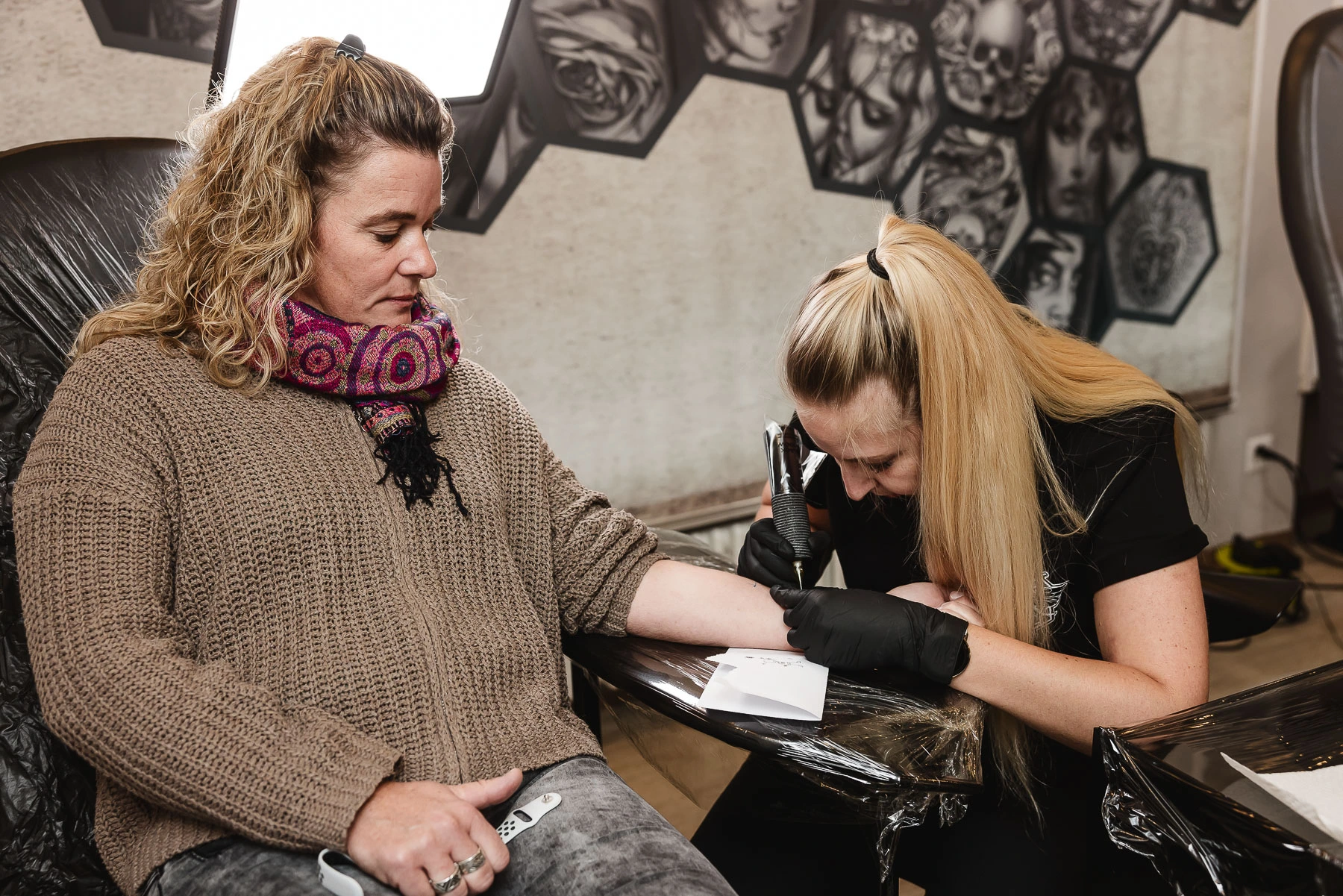
An old tattoo doesn't have to disappear completely to make room for something new. Often, it is enough to selectively reduce dark areas so that the new artist has significantly more creative freedom. The goal is not perfectly clear skin, but a base upon which a new design can be applied cleanly, harmoniously, and with long-term clarity.
Anyone looking to change an unwanted tattoo often faces a dilemma: wanting as few laser sessions as possible while also wanting a cover-up that isn't just bigger, darker, and heavier. Lightening can provide this flexibility. However, it requires patience, an honest assessment, and a plan where laser treatment and tattoo design are considered together from the start.
A cover-up doesn't hide a surface like paint on a wall. The old pigments remain in the skin and influence how the new tattoo will look. Particularly bold black lines, solid areas, or very dark motifs cannot simply be reworked with light colors or fine details. If you tattoo directly over them, you risk the new design becoming too dark or losing clarity after it heals.
Tattoo lightening selectively reduces pigment. This allows the cover-up artist to build more contrast, create finer transitions, and better adapt the motif to the specific area of the body. This does not automatically mean that every old tattoo must be completely lasered. For many projects, only those areas that would be particularly visible in the new design or that restrict the composition are treated.
The result depends heavily on the original tattoo. A small black script reacts differently than a large, repeatedly touched-up tribal piece. Color, pigment depth, the age of the tattoo, skin type, and individual regeneration also play a role. A professional consultation therefore avoids promising a fixed number of sessions before the area has been examined.
The most common starting point is clear: the existing tattoo is bothersome, but complete removal is not the actual goal. Perhaps the motif reminds you of a past phase of life, the style no longer fits, or the lines have blurred over time. At the same time, there is already an idea for a new tattoo—such as a floral motif, a realistic element, a graphic design or a composition that consciously reinterprets the area.
The process begins with an assessment of the skin and the old tattoo. This isn't just about whether laser treatment is technically possible. Equally crucial is the question: what is intended to be created over it? A good design sometimes consciously incorporates existing shapes rather than trying to make them invisible at any cost. Other areas must be significantly lightened beforehand so that elements like skin gaps, light flower petals, or fine shading can work effectively.
The first laser session is often described as short but intense. Pain sensitivity is individual and also depends on the area of the body. Many compare the pulses to a quick, hot snap against the skin. It is important to note: this treatment is not sold as a quick fix. After the session, the skin needs time to react, heal, and break down the released pigment particles through the body's natural processes.
In the days following, the area may be red, sensitive, or slightly swollen. Depending on the tattoo and the treatment, blisters or scabs may also form. This is when careful aftercare counts. The treated skin should be kept clean, protected from friction, and not subjected to unnecessary stress. Sun exposure, tanning beds, swimming pools, and intense physical activity are not recommended during the healing phase. Specific care instructions always depend on the skin's reaction and will be discussed at the studio.
The visible difference does not happen overnight. Immediately after a session, the tattoo may initially appear lighter or milky before the skin settles. Only with time can it be reliably assessed how much pigment has actually been reduced. For many, this is the most important lesson: having patience between sessions is part of the process—and not a sign that nothing is happening.
Not every pigment behaves the same way. Black and dark grey tones are often easy to work with, while certain colors can react differently. Professional and DIY tattoos also differ: some amateur tattoos are applied unevenly and superficially, while others contain a surprisingly large amount of pigment or pigment that is deeply embedded.
The following factors are particularly relevant when planning a cover-up:
The choice of artist also changes the starting point. An experienced cover-up is not a standard design simply placed over an existing tattoo; it is developed around the existing area. That is why it is worth introducing your cover-up idea before or, at the latest, during the laser planning phase. This allows for targeted lightening rather than treating more than is necessary.
Between the final laser treatment and the cover-up, the skin must be completely healed and stable. This waiting period is not just a formality. Tattooing on irritated, reddened, or still-regenerating skin can compromise both the result and the healing process. The skin should feel calm again and be free of scabs, tenderness, or open areas.
How long this takes is assessed on an individual basis. The deciding factor is not a calendar date, but the condition of the skin. In cases of scarring, very dense old tattoos, or a stronger reaction, it may be wise to give the tissue extra time. Starting too early doesn't save time; it risks a result that will need to be corrected later.
Before the tattoo appointment, the design is once again tailored directly to the lightened area. What looks good in a photo can read differently on actual skin. Good artists therefore check contrasts, visual flow, body shape, and the remaining traces of the old tattoo. Especially with cover-ups this adjustment is a hallmark of quality.
Lightening is not mandatory for every project. If the old tattoo is small, already faded, or favorably positioned, and the new design is intentionally dark, a direct cover-up may make sense. This saves treatment time and additional sessions.
The situation is different if you want a lighter, finer, or more detailed design. Even with very black, compact areas, preparatory lightening often makes the decisive difference. It not only prevents the cover-up from having to be excessively large but also gives the new tattoo more breathing room and a better long-term appearance.
The best decision is rarely made based on a generic before-and-after photo. It comes from the interplay between your skin, the existing tattoo, your desired design, and a team that professionally combines laser treatment and tattooing. At Blade & Shade, we therefore first clarify which result is realistic and aesthetically sound—without pressure to pursue complete removal or a cover-up that doesn't suit you.
A cover-up should feel like a fresh start, not a compromise. If you bring your old tattoo and your new idea to a consultation, we can plan together which areas truly need lightening and when the right moment for the new design has arrived.


