
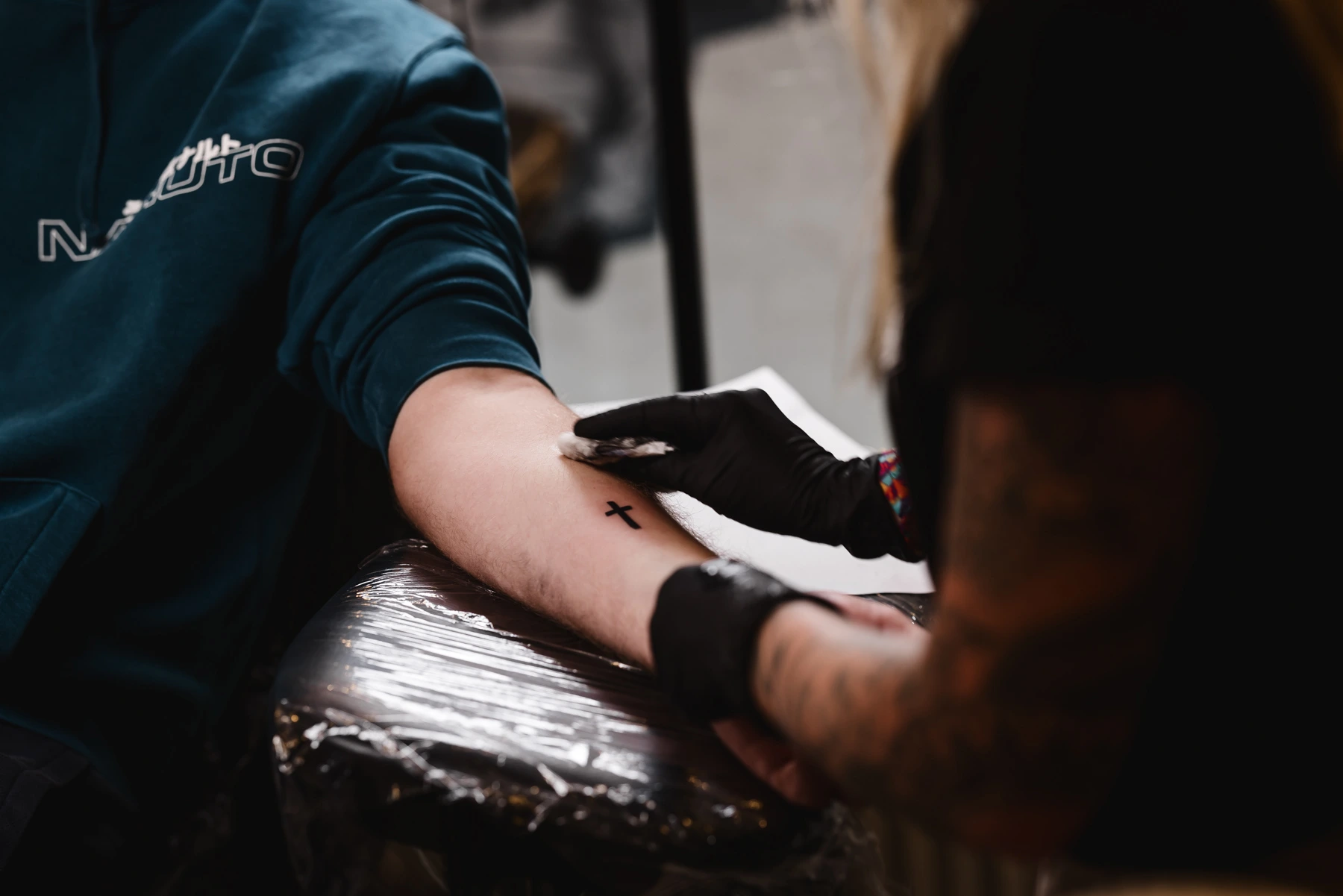
A fresh tattoo often looks great immediately after the session, but the real test comes afterward. Proper tattoo aftercare doesn't just protect the lines, shading, and colors. It also protects your skin. This is where most mistakes happen: using too much cream, scratching too soon, working out right after the appointment, or exposing healing skin to the sun.
Getting a tattoo means intentionally creating a wound in the skin. That's exactly the point. A tattoo isn't just ink under the skin. First and foremost, it's a fresh wound. How cleanly and calmly that wound heals has a bigger impact on the final result than many people realize.
Good aftercare helps prevent inflammation, reduces the risk of color loss, and minimizes unnecessary friction. Poor aftercare, on the other hand, can lead to patchy healing, blurry lines, or prolonged skin irritation. Not every small mistake will ruin a tattoo, but many problems don't happen during the tattooing process itself. They happen in the days that follow.
Immediately after your session, your tattoo will usually be covered for protection. Depending on the studio, your skin type, and the tattoo's location, this may be a traditional wrap or a specialized protective film. Both serve the same purpose: protecting the fresh tattoo from dirt, friction, and unnecessary contact.
It's important to follow your tattoo artist's instructions carefully. Not every covering should stay on for the same amount of time. Once the covering is removed, gently wash the tattoo with clean hands and lukewarm water. A mild, fragrance-free cleanser can be helpful if recommended. After washing, don't rub the area dry. Instead, gently pat it dry with a clean paper towel or a freshly washed, lint-free towel.
The first two weeks are usually the most important stage of healing. During this time, the skin calms down, forms new protective layers, and sheds excess ink, wound fluid, and dead skin cells. That's why a healing tattoo can look different from one day to the next.
Mild redness, tightness, and warmth are normal at the beginning. Light peeling is also common. What isn't normal are severe swelling, throbbing pain, unpleasant odor, or yellow discharge.
Aftercare cream should always be applied in a thin layer. This is one of the most common misunderstandings in tattoo healing. More is not better. Applying too much cream can over-soften the skin, trap moisture, and slow down the healing process. The goal is to keep the skin hydrated and comfortable, not heavily coated.
How often you apply cream depends on your skin type and the tattoo's location. If the tattoo feels noticeably dry, a thin layer can help. If the skin still feels well moisturized, there's no need to apply more automatically. The goal is calm, clean healing, not constant maintenance.
A fresh tattoo requires a little discipline for a short period of time. As soon as it starts looking good, many people return to their normal routines too quickly. That's understandable, but not ideal.
Avoid excessive friction, tight clothing over the tattooed area, swimming pools, saunas, lakes, long baths, and intense exercise during the first days. Sweat itself isn't necessarily the problem, but heavy movement and friction can irritate healing skin. This becomes especially noticeable with tattoos on the ribs, behind the knees, feet, or arms.
Direct sunlight is another common mistake. UV exposure is not a good idea for freshly tattooed skin. The skin is sensitive, irritated, and still healing. Sun exposure can interfere with recovery and negatively affect the appearance of the tattoo. As long as the tattoo is fresh, keep it out of direct sunlight.
Scratching and picking are also off-limits. If flakes or scabs begin to form, they need to come off naturally. Picking at them can lead to color loss and small open wounds. Itching is normal. Acting on it isn't.
Showering is perfectly fine as long as you're careful. A quick shower is fine. Long, hot showers are not ideal. The tattoo shouldn't be soaked for extended periods. After showering, gently dry the area and apply a thin layer of aftercare product if needed.
It's worth paying extra attention while sleeping, especially during the first few nights. Fresh tattoos can stick to fabrics or become irritated through friction. Clean bedding is essential. For larger tattoos or areas that are still leaking fluid, loose clothing can help prevent rubbing during the night.
Work situations vary. Office jobs are usually straightforward. Construction sites, kitchens, dusty environments, prolonged sun exposure, or physically demanding jobs involving sweat and friction can be more challenging. In these cases, it's worth discussing aftercare with your studio beforehand because the tattoo's location and your daily routine can make a significant difference.
Many first-time clients become concerned because tattoo healing doesn't always look attractive. During the first few days, a tattoo may appear shiny, dry, tight, or lightly flaky. It may even look slightly dull for a short period. None of these are necessarily bad signs.
Problems arise when irritation increases rather than decreases. Significant spreading redness, excessive heat, throbbing pain, severe swelling, or pus are warning signs. Fever or feeling generally unwell should also be taken seriously. If these symptoms occur, seek medical advice instead of waiting.
Some reactions aren't necessarily infections but should still be evaluated. Examples include unusual rashes, burning caused by an aftercare product, or persistent weeping from the tattoo. Not every complication is serious, but healing skin should gradually improve, not worsen.
Not every tattoo heals the same way. A small fineline tattoo on the forearm behaves differently from a large piece on the calf, back, or hand. Areas that move frequently, experience friction, or have thinner skin often require extra attention.
Your skin type also plays a role. Dry skin generally needs more moisturizing, while oily skin may need less. People with sensitive skin or allergies should be especially cautious with skincare products. Fragranced creams, home remedies, and social media trends are rarely good ideas.
The season is often underestimated as well. In summer, sweat, sun exposure, and outdoor activities become bigger concerns. In winter, dry indoor heating and multiple clothing layers can irritate the tattooed area. Proper aftercare means adapting to your situation rather than following the exact same routine every time.
There are countless misconceptions about tattoo aftercare. Some people swear by using large amounts of cream, while others recommend barely using any. Some promote home remedies, while others constantly re-wrap their tattoos. The problem is that what happened to work for one person isn't necessarily good advice for everyone.
A simple, clean routine is usually best: wash your hands, gently clean the tattoo, pat it dry, apply a thin layer of aftercare product, avoid friction, and pay attention to warning signs. That's often all it takes. Good aftercare is rarely complicated. It's mostly about consistency.
If you're ever unsure, it's better to ask one question too many than one too few. A professional studio won't give you vague, generic advice. Instead, they'll explain what makes sense for your tattoo, your skin, and the specific area of your body. This individual guidance becomes especially valuable for larger projects, cover-ups, or sensitive locations.
A tattoo often looks much calmer on the surface after two to three weeks. However, that doesn't mean the skin underneath has fully recovered. Deeper healing takes longer. Depending on the tattoo, your skin, and its location, complete healing can take several more weeks.
People in and around Lucerne who value clean work, personalized advice, and clear aftercare guidance are in good hands at Blade & Shade. A great tattoo doesn't end with the final needle stroke. Its true quality only becomes visible when you give your skin the healing time and care it needs.


