
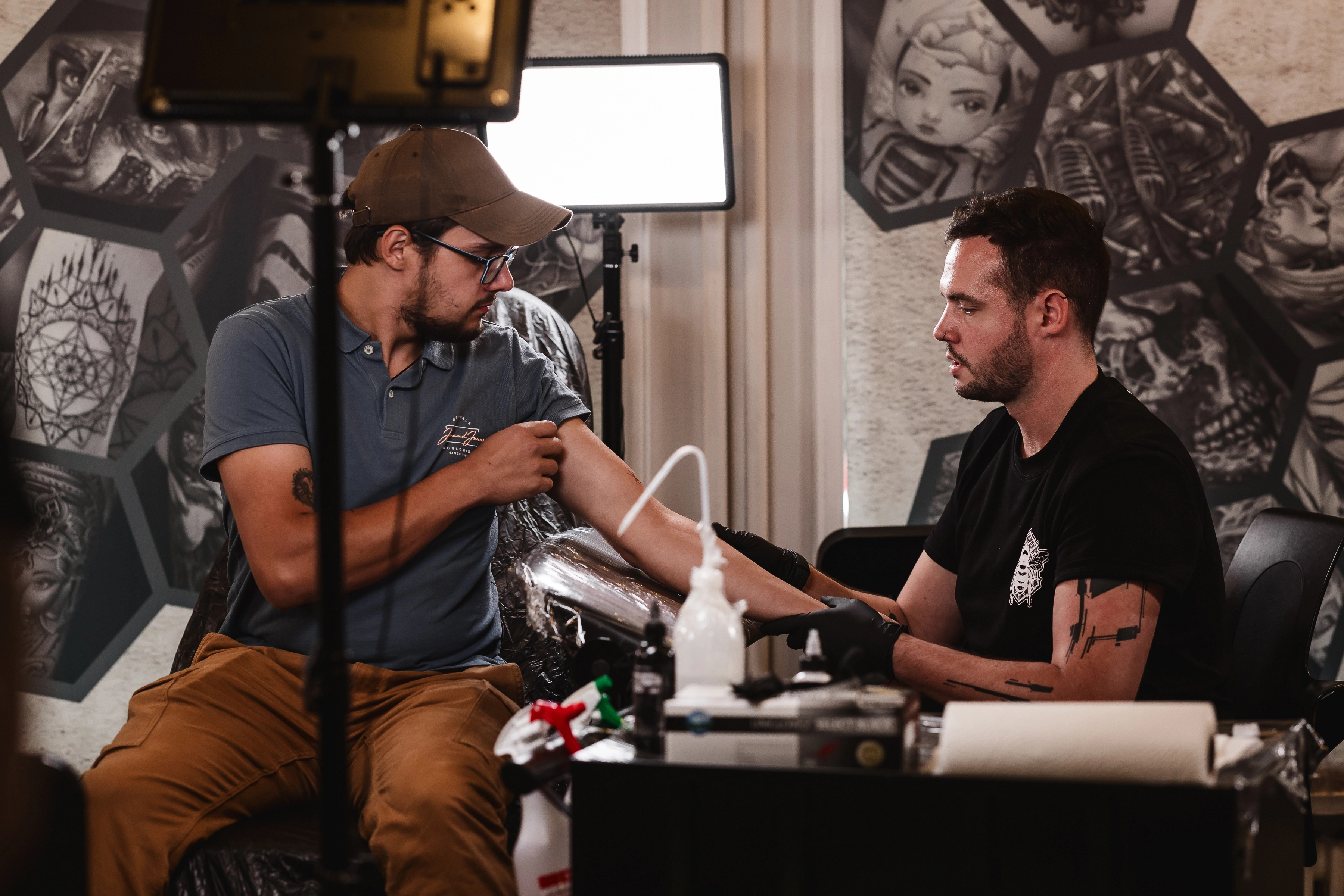
The question of pain during tattoo removal comes up in almost every consultation, and it is completely valid. Whether you want to get rid of an unwanted design, lighten it for a cover-up, or simply clear a spot on your skin, you naturally want to know what to expect beforehand. The honest answer: laser treatment is noticeable, but for most people, it is quite tolerable. How intense you find it depends on several factors.
A professional studio takes this concern seriously. Instead of downplaying the treatment, we explain the process transparently, identify which areas are more sensitive, and show you how to effectively reduce any discomfort. This builds confidence and helps you approach your appointment with realistic expectations.
Many clients describe the laser pulse as a quick, hot snap against the skin. It is often compared to a rubber band repeatedly snapping against the skin. Others describe it more like tiny pinpricks or a very fast, localized heat sensation.
It is important to note that the pain is not constant. The laser delivers extremely short pulses, and treating a small tattoo can be finished in just a few minutes. Immediately afterward, your skin often feels warm, tight, or slightly burning, similar to a sunburn. This sensation usually subsides as your skin begins to heal.
Whether tattoo removal is more painful than getting a tattoo cannot be answered with a simple yes or no. When getting a tattoo, the stimulus acts on an area for a longer period. With laser treatment, the pulses are more intense but significantly shorter. Many people therefore find the removal process unpleasant, but manageable in terms of time.
It is not just your personal pain threshold that matters. Your tattoo itself, the body area, and the chosen treatment method also significantly influence the experience.
Areas with little subcutaneous fat, many nerve endings, or those directly over bone are usually more sensitive. These include the ankles, tops of the feet, shins, ribs, spine, hands, fingers, or neck. Treatment on the upper arms, thighs, or calves is often described as more tolerable.
This does not mean that sensitive areas cannot be treated. It simply helps to plan the session accordingly and to carefully adjust the laser to your skin and the specific zone.
A small fine-line design is usually treated quickly. For large, densely pigmented tattoos, a session takes longer because more skin surface is being treated. This can increase the strain, even though each individual laser pulse remains just as short.
Black ink can often be treated effectively. Light colors like yellow, green, blue, or turquoise can be more challenging depending on the pigment and may require more sessions. The decisive factor is not just the color, but also how deep and dense the ink is in your skin. Professionally applied tattoos, old designs, and touched-up areas all react differently to the laser.
Pain is personal. Lack of sleep, stress, anxiety, hunger, or high physical tension can make you perceive impulses more intensely. If you arrive for your appointment well-rested, well-fed, and relaxed, you will often find the treatment more comfortable.
For women, the menstrual cycle can also play a role, as pain sensitivity may be increased during certain phases. This is no reason to cancel an appointment altogether. However, if you know your body well, you can plan your appointments accordingly.
Good preparation is no substitute for professional treatment, but it can make your appointment noticeably more comfortable. Eat and drink enough beforehand. Your body will feel the strain more quickly if you have an empty stomach, are dehydrated, or have had a tiring night.
Avoid alcohol the day before and on the day of your treatment. Alcohol can affect blood circulation and put unnecessary strain on your skin. Intense sun exposure, tanning beds, and freshly tanned skin are also not a good idea before laser treatment. Your skin should be as calm, uninjured, and non-irritated as possible.
Speak openly about medications, medical conditions, previous scarring, skin reactions, and any concerns you have regarding pain. Certain medications or active ingredients can be relevant to the treatment. You should not take painkillers on your own immediately before your appointment. In particular, you should clarify the use of blood-thinning preparations with your specialist or doctor beforehand.
Local cooling can help dampen the heat sensation during treatment. Which method is appropriate depends on your skin, the area of the body, and the laser being used. The crucial factor is that the cooling is applied professionally and does not interfere with the treatment.
Before the laser session, we assess the area to be treated: What colors are present? How old is your tattoo? Are there any scars, skin changes, or indications that the treatment should be postponed? Afterward, your skin is cleaned and the appropriate settings for the treatment are selected.
We work step-by-step during the session. You don't have to suffer in silence if a spot feels unexpectedly intense. A short break, an adjustment to the cooling, or a slower pace can often help. Especially during your first session, it is helpful to speak openly about how you feel. This allows us to tailor the rest of the treatment to you individually.
At Blade & Shade the focus is not just on removing ink. It is about treating your skin responsibly, whether you want to remove your tattoo completely or lighten it specifically for a future cover-up.
After the session, redness, warmth, swelling, and a slight feeling of tightness are possible. Depending on the reaction, blisters or crusts may also form. This is not automatically a sign of a problem, but can be part of the normal healing process. It is important that you do not scratch your skin, do not open any blisters, and keep the treated area clean.
Cool the area only gently and with a clean barrier between the ice pack and your skin. You should avoid friction, tight clothing, swimming pools, saunas, intense physical exertion, and direct sun in the initial period. You will receive specific care instructions from us, as the area of the body and your skin's reaction play an important role.
The interval between sessions is also an important part of the treatment. The laser breaks down the color pigments, but your body handles the removal process over several weeks. Intervals that are too short do not automatically lead to faster results, but can unnecessarily stress your skin. Patience is not an empty promise in tattoo removal; it helps to protect your skin.
We do not perform laser treatment in cases of sunburn, fresh tans, open wounds, inflammation, or acute skin irritation. Even if you are ill or do not feel physically fit, rescheduling is often the better choice. Safety and a good skin outcome take priority over a quick start.
If you are prone to severe scarring, are pregnant, breastfeeding, or taking relevant medication, you should address your personal situation early on. A reputable consultation will clarify not only what is possible, but also when it makes more sense to wait a little longer before starting treatment.
The pain associated with tattoo removal is no reason to prematurely rule out a change you want. With honest advice, modern technology, good preparation, and careful aftercare, a major uncertainty becomes a clearly manageable process.


