
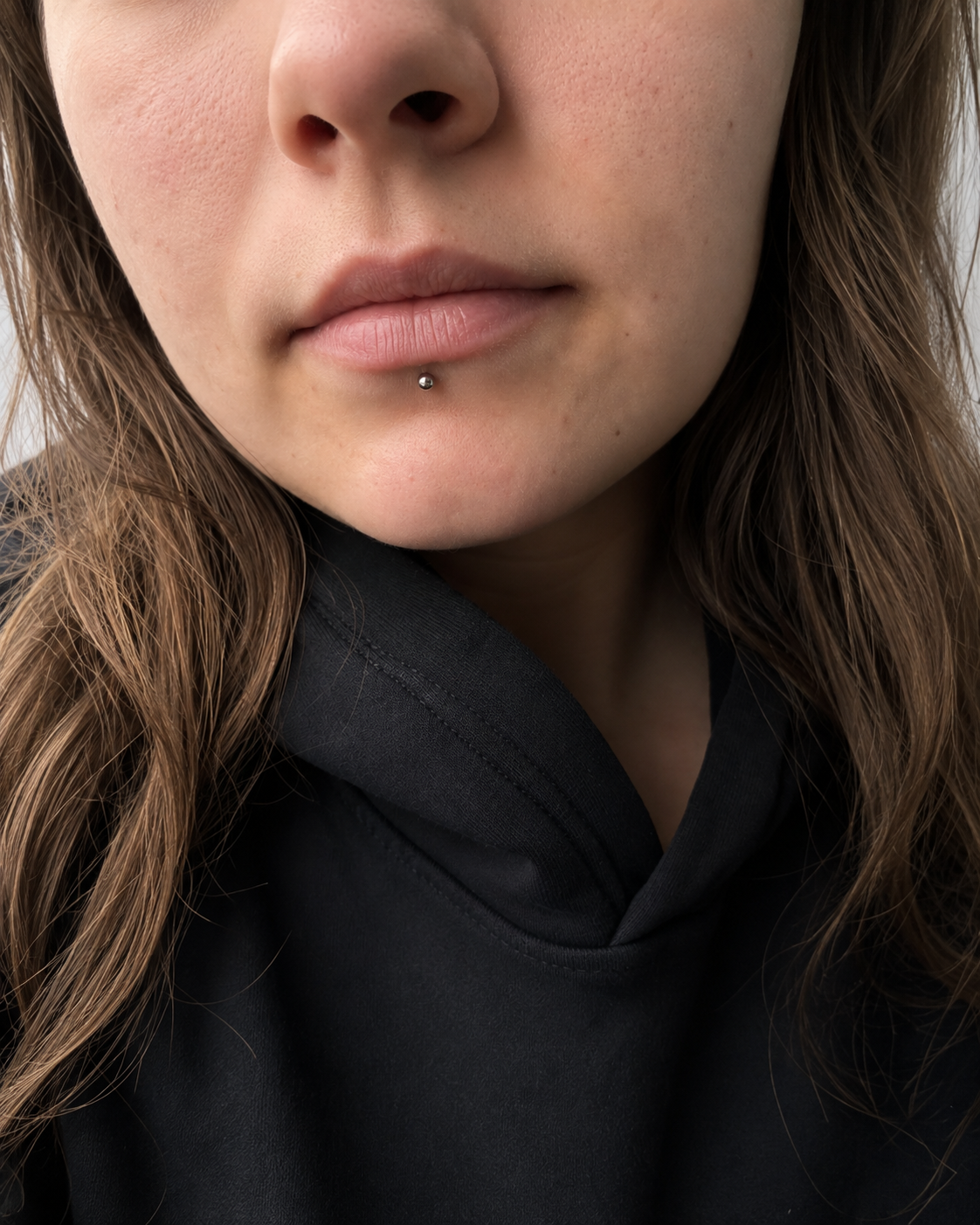
A lip piercing may be small, but it still makes a statement. It changes the overall look of your face and is something you notice when you speak, eat and laugh, so it is worth giving the decision some thought rather than squeezing it in between two appointments. The right placement, high-quality initial jewellery and proper aftercare can make all the difference between a smooth experience and unnecessary stress.
A lip piercing isn't just one specific piercing; it's a collective term for various placements around the mouth and lips. Some styles go through the lip into the oral cavity, while others sit vertically in the lip tissue. This isn't just a matter of aesthetics: healing, jewelry shape, and potential impact on your teeth and gums vary depending on the position.
A professional consultation doesn't start with asking which ring looks best. First, your anatomy is assessed. Lip shape, tissue, tooth alignment, gum health, and habits like teeth grinding or frequently playing with jewelry are all relevant. A good studio will also be clear if a desired placement isn't ideal for you or if an alternative would be more sensible in the long run.
Pain is often overestimated, but it is very subjective. Many clients find the quick prick quite manageable. The first few days afterward are usually more challenging: the lip can swell, feel tight, and be sensitive when eating. Therefore, it is best to plan your appointment so that it doesn't fall right before an important event, a long concert weekend, or a business meeting.
Your choice should fit your face, your style, and your daily life. Not every trendy placement is automatically the best choice for everyone.
The classic labret sits centered below the lower lip. With a side labret, the placement is off-center. Both styles are often worn with a straight stud initially because it is easier to manage during the swelling phase. A ring may be possible later, provided the position and healing process allow for it.
These piercings have the potential to come into contact with the inside of the mouth. The back of the jewelry should therefore sit as still as possible and not constantly rub against the gums or teeth. Frequently playing with the jewelry or biting down on the stud significantly increases the risk of irritation and dental damage.
The Medusa sits in the center of the philtrum between the upper lip and the nose. Monroe and Madonna piercings are placed to the side above the upper lip. Depending on the jewelry, they can look very subtle or intentionally glamorous and are often a great choice if you want a single, well-defined detail.
Here, too, the piercing channel leads into the mouth. Precise placement and a suitable jewelry attachment are crucial to ensure the piercing looks aesthetic and causes as little interference as possible. Especially with asymmetrical facial features, it is worth carefully marking the position before piercing and viewing it from different angles.
With a vertical labret, the piercing runs vertically through the lower lip. Both balls or attachments are visible from the outside, and the jewelry does not enter the oral cavity. This makes this style interesting for people who want to avoid contact between jewelry and their teeth or gums.
In return, the focus is more on the shape of the lip and the correct depth of the piercing channel. A vertical labret requires sufficient, suitable tissue. Whether it is a good option for you can only be reliably determined during an in-person assessment.
Snake bites are two piercings placed on either side below the lower lip. They can be positioned symmetrically or intentionally slightly offset. While combinations look striking, they also mean two fresh puncture wounds, more swelling, and the need for consistent care in multiple spots.
If you are getting a lip piercing for the first time, starting with a single placement is often a more relaxed approach. You can get used to the healing process and always add more later. If you already know you want a balanced set, the placement should be planned as a cohesive look from the start.
Before the piercing we will discuss your preferences, your anatomy, and any potential risks. Be sure to inform your piercer openly about any allergies, medications, medical conditions, previous issues with wound healing, or current inflammation in your mouth. If you are unsure, it may be wise to seek advice from a dentist or doctor beforehand.
Next, the area will be marked. Take your time to check the mark in the mirror: look at it straight on, while smiling, and from a slight side angle. Only when you are happy with the position will we proceed using sterile, single-use equipment and insert the appropriate initial jewelry.
The initial jewelry is chosen for functionality, not necessarily for its final look. It needs extra length to accommodate initial swelling. Once the lip has gone down, a post that is too long should be professionally shortened promptly. This downsizing reduces movement, friction, and the risk of snagging the jewelry or biting down on it with your teeth.
At Blade & Shade every piercing begins with a personal assessment. After all, beautiful jewelry is only a good choice if the placement, material, and aftercare are right for you.
Depending on the type of piercing, your body, and your aftercare routine, a lip piercing often takes several weeks to heal. Don't expect it to be fully healed after just a few pain-free days. The area may look calm on the outside while the puncture channel is still sensitive on the inside.
Always wash your hands thoroughly before touching the area. Clean the outer puncture site only with a suitable sterile saline solution or according to the specific instructions provided by your studio. Harsh agents like alcohol, hydrogen peroxide, or heavily perfumed products irritate the tissue and can prolong the healing process.
For piercings that exit inside the mouth, good oral hygiene is key. Brush your teeth carefully with a soft toothbrush and rinse with water after eating. If you are recommended a mouthwash, it should be alcohol-free. Don't overdo it, though: cleaning too frequently or too vigorously can also irritate the area.
During the first few days, cool, soft foods are often more comfortable. Very spicy food, alcohol, smoking, and intense kissing can put extra strain on the mucous membrane and should be avoided as much as possible during the initial healing phase. Exercise is generally fine as long as you feel up to it, but avoid any impact to the mouth and make sure your hands are clean.
Do not rotate the jewelry or remove it just to clean it. This irritates the channel and can introduce bacteria. Jewelry changes should only be handled by a professional after sufficient healing or for a planned downsizing.
Mild swelling, redness, tenderness, and clear to whitish-yellowish wound discharge can be normal in the initial phase. They are not automatically signs of an infection. It becomes problematic if the symptoms increase significantly instead of subsiding.
Have the area assessed promptly if you experience severe throbbing pain, significant heat, foul-smelling or greenish discharge, fever, or rapidly spreading redness. You should also not wait if the jewelry is visibly embedding, becoming too tight, or if you notice significant irritation to your teeth or gums.
Do not remove the jewelry yourself if you suspect an infection. The channel can close up while trapping the inflammation inside. Contact an experienced piercing studio and, in the case of severe symptoms, consult a medical professional as well.
High-quality, biocompatible materials are crucial for initial jewelry. Implant-grade titanium is a common and proven choice, especially for sensitive skin or known nickel sensitivities. The jewelry should be well-crafted with smooth surfaces and must be precisely sized in length and gauge for the specific placement.
Rings are popular, but not always the best choice to start with. They move more and can irritate fresh piercing channels. Once healed, your choice of jewelry depends not only on your personal taste but also on your anatomy to ensure it is comfortable and practical to wear.
For all lip piercings that come into contact with the mouth, oral health remains a key priority. Regularly check whether the jewelry is rubbing against your teeth, enamel, or gums. A professionally fitted, downsized piercing and the habit of not playing with it will reduce the risk. Regular dental check-ups are still recommended.
A lip piercing should feel like a natural part of you, not a compromise. Take your time during the consultation, be open about what is important to you, and choose the option that fits your daily life even after the initial excitement wears off.
Want to find out which lip piercing suits you best? Book an appointment online for a free, no-obligation initial consultation with us. We’ll take the time to answer your questions, assess your anatomy together and discuss which placement and jewellery options are right for you. We look forward to welcoming you at Blade & Shade!


