
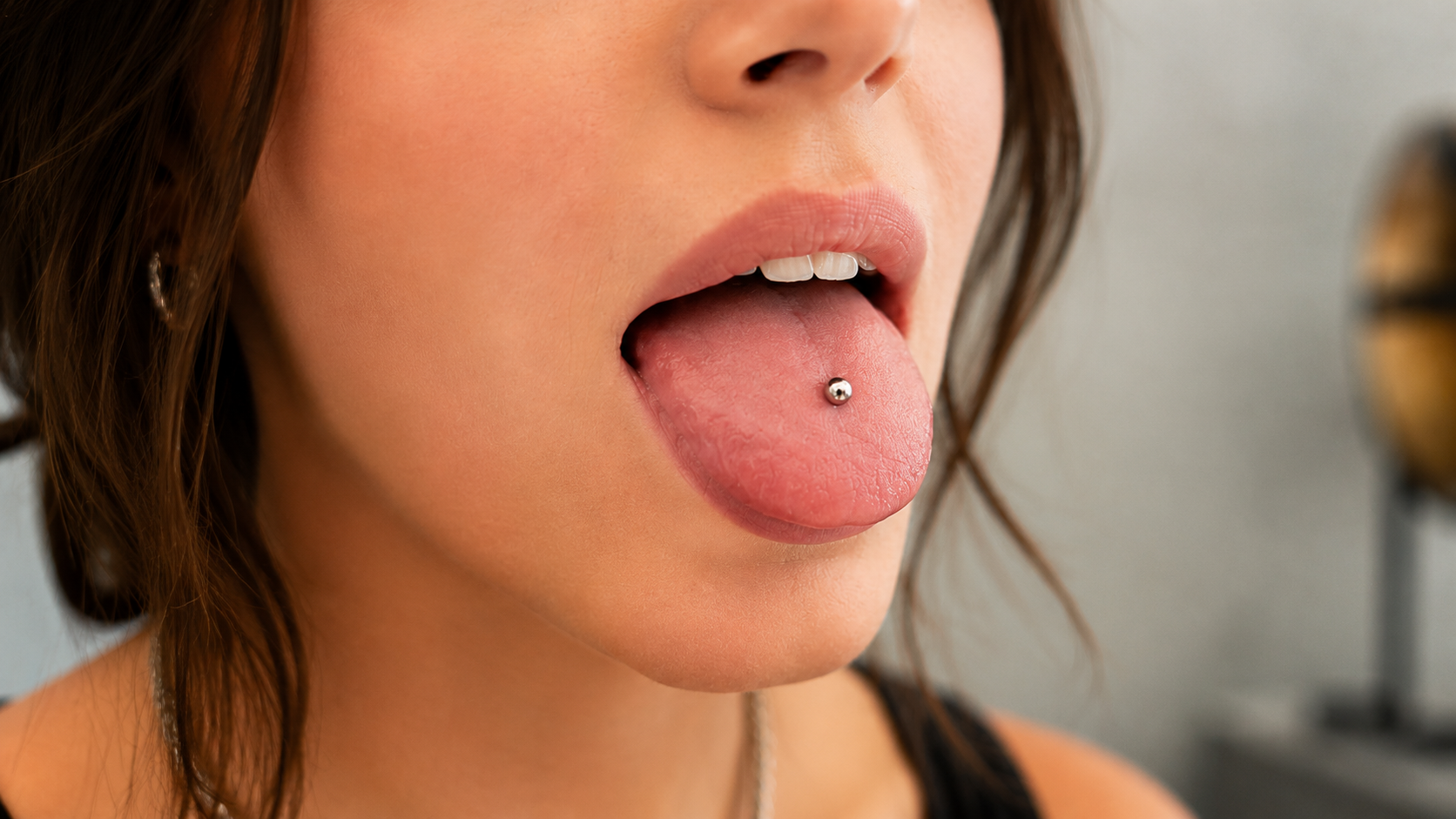
A tongue piercing may look small, but it is still a decision that deserves careful consideration. The first few days can be more uncomfortable than many people expect. Your tongue may swell, and speaking and eating can feel unfamiliar at first. With professional piercing, suitable initial jewellery and consistent aftercare, however, the healing process is usually quite manageable.
A reputable studio will take the time to answer your questions before your appointment and take a close look. The structure of your tongue, the position of your blood vessels, and your oral and dental health are all decisive factors. Not every tongue is equally suited for a classic center tongue piercing. A prominent frenulum or specific anatomical features can also influence the placement.
The piercing is performed exclusively with a sterile, single-use needle, never with a piercing gun. The area and the planned position are marked beforehand. The actual piercing takes only a moment. Afterward, a longer, high-quality initial bar is inserted to give the tongue enough room to swell.
Implant-grade titanium is an excellent choice for initial jewelry. The material is lightweight, high-quality, and generally well-tolerated. Acrylic balls or very small, hard balls may look appealing, but they aren't always the best solution immediately after getting pierced. Your piercer should clearly explain the material, length, and closure to you.
The most significant swelling usually occurs during the first three to five days. Cold drinks, small ice cubes, and soft, lukewarm meals can provide relief. Avoid scheduling your appointment right before an important presentation, a long workday involving a lot of talking, or a vacation.
The healing process for a tongue piercing often takes four to eight weeks. This doesn't mean everything is back to normal after a few days: even if pain and swelling subside quickly, the internal piercing channel remains sensitive. Patience is a key factor in quality healing.
As soon as the swelling has completely gone down, the long initial bar must be replaced with a shorter one promptly. This step is often underestimated. Jewelry that is too long hits your teeth and gums more forcefully, can interfere with speaking, and increases the risk of dental damage. It is best to have the jewelry changed professionally.
Good oral hygiene is essential during the healing period. Brush your teeth carefully with a soft toothbrush and rinse your mouth with an alcohol-free mouthwash after eating. Be careful not to move the jewelry with your teeth or play with it unnecessarily. This irritates the piercing channel and can prolong the healing process.
In the first few weeks, you should avoid smoking, alcohol, and very spicy or highly acidic foods as much as possible. Kissing and oral sex should also be put on hold until the piercing channel has healed well. Bacteria can easily reach a fresh wound in the mouth—hygiene protects both you and your partner.
Only touch the jewelry with freshly washed hands. If the balls loosen, do not tighten them with unwashed fingers. It is better to stop by the studio if you are unsure. A missing closure or incorrectly inserted jewelry is easier to fix than finding a swallowed piece.
A tongue piercing is not without risks. In addition to swelling, pressure, and temporary speech difficulties, complications such as infections, persistent bleeding, or incorrect placement can occur. Potential damage to teeth and gums is particularly relevant. Anyone who regularly chews on the bar or wears jewelry that is too long for too long risks chipping their tooth enamel and causing gum recession.
Warning signs include increasing rather than decreasing pain, severe redness, throbbing swelling, foul-smelling discharge, fever, or difficulty breathing and swallowing. If you experience shortness of breath or rapidly increasing swelling, seek medical attention immediately. For other issues, do not attempt to cut the jewelry yourself or remove it prematurely; have it professionally assessed first.
You should also mention your tongue piercing if you are having dental work or a planned surgery. People with certain pre-existing conditions, a compromised immune system, or blood clotting issues should consult a medical professional before getting a piercing.
Quality is not just about the moment of piercing. It is reflected in sterile procedures, anatomically sound placement, transparent aftercare instructions, and an accessible point of contact during the healing process. At Blade & Shade in Lucerne, this personal support is an integral part of the piercing experience.
When choosing a tongue piercing, don't base your decision on the fastest appointment or the lowest price. An experienced studio, high-quality jewelry, and a follow-up appointment for downsizing provide the best conditions to ensure that a spontaneous idea turns into a piercing that feels great in the long run. If you have any further questions or would like a personal consultation, you can visit us at Blade & Shade and easily book a free, no-obligation initial consultation online.


